Shipment protection for loss or theft

Your cart is empty.
Go to shop
TOTAL: €0.00

What to wear to a tennis match, from Roland Garros to your local club: a spectator’s guide to looking sharp and comfortable courtside all day long.
Tennis season has a way of pulling everyone toward the court — players and spectators alike. With Roland Garros underway and club tournaments filling the calendar, the question of what to wear to a tennis match as a spectator becomes surprisingly real. You are not playing, but you are still part of the scene, often for five or six hours, often in full sun. The goal is simple to state and easy to get wrong: look considered, stay comfortable, and never look like you tried too hard. This guide covers exactly how to do that, whether your seat is at a Grand Slam or courtside at a local club.
The short answer: aim for smart-casual built around natural fabrics, a clean colour palette, and real sun protection. A collared shirt or refined tee, tailored shorts or trousers, comfortable shoes, and a hat will carry you through almost any match.
Tennis is one of the few sports where the spectator dress code shifts dramatically by venue. A look that is perfect at one will feel wrong at another, so this is the first decision to make — before you think about a single garment.
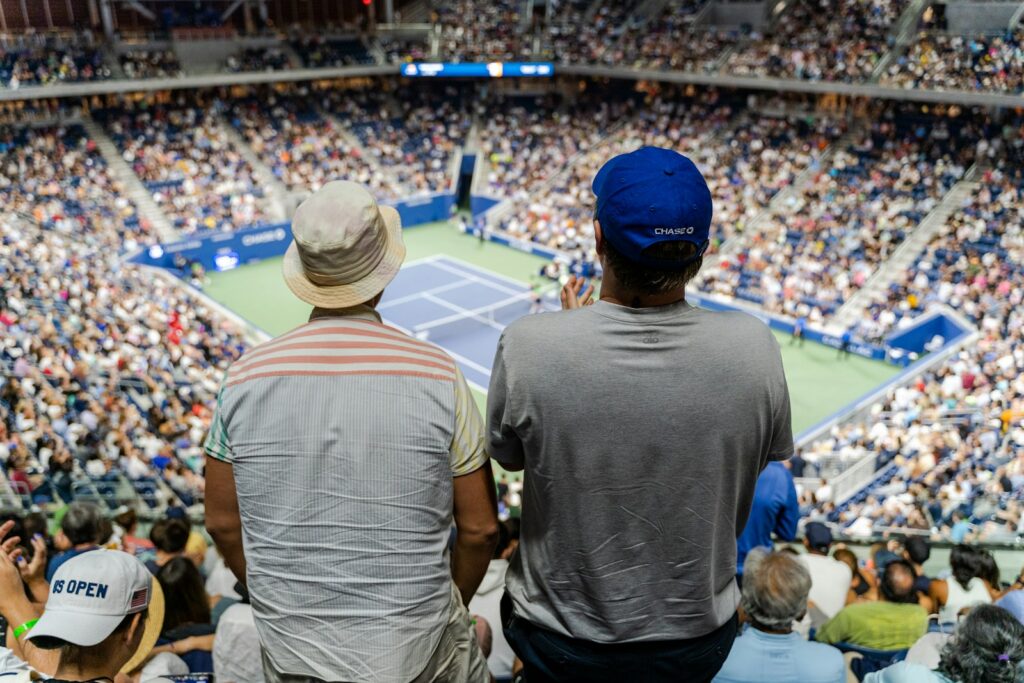
Grand Slam and major tournaments. Roland Garros, Wimbledon, and the show courts of the US Open lean elegant. Wimbledon famously asks for no formal dress code from the crowd, yet the stands fill with linen, blazers, and sundresses. The unspoken rule is understated polish — you are dressing for a garden party that happens to have a scoreboard. If you have a hospitality or members’ enclosure ticket, expect that bar to rise further: jackets for men are common, and trainers and sportswear can look out of place.
Private and members’ clubs. Many European tennis clubs still expect spectators to look the part: collared shirts, neat trousers or tailored shorts, and proper shoes rather than trainers caked in mud. Clubs are social spaces with their own quiet codes, and as a guest you are reading the room. When in doubt, dress one notch above casual — it is never the wrong call.
Public courts and junior matches. Here the code relaxes. Comfort wins, and nobody is checking. But a tidy, coordinated look still reads better than gym kit thrown together — it is the difference between an outfit and just getting dressed. A clean tee, decent shorts, and good sneakers are all it takes.
Because the timing of this guide lands squarely in the Roland Garros window, it is worth a specific note. Paris in late May and early June can swing from genuine heat to a sudden cool, breezy afternoon. The Parisian crowd dresses the part — relaxed but elegant, natural fabrics, quiet colours — and plans for both halves of the forecast in a single outfit.
Across every venue, a few principles hold. Tennis style is quiet by nature. It rewards restraint — clean lines, few logos, colours that belong together. This is the aesthetic the wider tenniscore movement borrowed and then sent down fashion runways, but it started in the stands and on the courts decades ago. If you want the background on that, our guide to what tenniscore actually is traces it in full.
Stick to a tight palette: optic white, cream, navy, and a single muted accent such as soft green or pale blue. These shades photograph well, never clash with the clay or grass behind you, and always look intentional. A spectator outfit in three colours that belong together will out-dress one in six that do not, every time.
Fabric matters as much as colour. Natural and recycled fibres — organic cotton, linen, fine knits — breathe far better than synthetics when you are sitting in direct heat for hours. Synthetic fabric traps warmth and holds odour; a heavyweight organic-cotton tee or a linen shirt keeps moving air against your skin and still looks crisp at the end of a long session. You feel the difference by the third set.
A few reliable formulas cover almost every match-day scenario, and each one can be dressed up or down by the pieces around it.
Choose pieces that move with you. You will be standing for changeovers, walking concourses, climbing to your seat, and reaching for a drink. Anything stiff, tight, or fussy becomes a quiet irritation by the second set and a real one by the fifth. The most stylish spectator in the stands is almost always also the most comfortable one.
The men’s version of match-day dressing is even simpler, and that is its strength. You do not need many pieces — you need a few good ones.
One refined tee in a heavyweight organic cotton does more work here than three trend pieces. It holds its shape through a long day, looks intentional in every photo, and pairs with shorts, chinos, or a blazer without a second thought. If you are also the one playing later in the week, our guide to what to wear to play tennis covers the on-court side.
Spectators underestimate the elements far more than players do. Players move, rotate ends, and sit only briefly; you sit still, often facing the sun, for the entire match. Planning for the weather is not fussiness — it is the difference between enjoying the tennis and enduring it.
Heat and sun. Light colours, loose cuts, and breathable fabric are non-negotiable. A brimmed hat protects your face far better than sunglasses alone, shading the nose and cheeks that catch the most sun. And do not rely on a single morning application of sunscreen — five hours in the stands needs reapplication. Our guide to the best sun protection for tennis players applies just as much to the crowd as to the court.
Wind and cool evenings. Day sessions turn into chilly night sessions quickly, especially in spring. A packable knit or overshirt that folds into your bag is worth its space ten times over. Choose it in a neutral tone so it works with whatever you have on.
Sudden rain. At outdoor venues, a compact layer in a quiet colour keeps you dry without turning your outfit into emergency wear. A neat, folded rain layer reads very differently from a crumpled plastic poncho.
The right accessories carry a simple outfit and solve real problems at the same time. For a long day courtside, each of these earns its place twice over.
Notice that none of these is decorative for its own sake. Tennis style, on the court and in the stands, is practical first — and looks better precisely because everything in the outfit is doing a job.
A few things consistently look wrong courtside, and they are easy to avoid once you know them. Skip head-to-toe activewear if you are not playing — it signals you wandered in from the gym rather than came to watch. Avoid loud, all-over logos and slogans; tennis style is the opposite of shouting, and a busy graphic fights every photo you appear in. Leave stilettos and stiff dress shoes at home, because you will walk and climb far more than you expect on grass, gravel, and stairs. Resist heavy fragrance in close, warm seating, where it becomes everyone’s problem. And do not over-think it into a costume — one or two tennis references are elegant, a full themed outfit is not. Restraint, again, is the entire point.
Before you leave for a match, a thirty-second mental run-through saves the day:
Is there a dress code for tennis spectators? Most public venues have none, but Grand Slams and private clubs expect smart-casual, and hospitality areas can expect more. When unsure, dress one level above casual — a collared shirt or refined tee never looks out of place.
What to wear to a tennis match in hot weather? Choose light colours and loose cuts in organic cotton or linen, add a wide-brim hat, and carry sunscreen to reapply every two hours. Breathable natural fabric beats synthetics for long hours in the sun.
Can you wear jeans to a tennis match? Yes at casual venues, ideally in a lighter wash and paired with a polished top. For Grand Slams or members’ clubs, tailored trousers or shorts read better and feel far cooler through a long day.
What should men wear to a tennis match? A collared polo or clean organic-cotton tee with tailored shorts or chinos and minimal sneakers. Add an unstructured blazer for show courts and hospitality, and a cap for sun.
Do spectators have to wear white? No. The all-white rule applies to players at Wimbledon, not the crowd. Spectators simply lean on a quiet palette of white, cream, navy, and a soft accent colour.
What should I wear to Roland Garros specifically? Relaxed Parisian elegance: natural fabrics, quiet colours, a hat for the clay-court glare, and one light layer for a cool, breezy afternoon. Comfortable shoes are essential for the long walks between courts.
What is the most common spectator style mistake? Full activewear when you are not playing, and loud logos. Both pull against the quiet, considered look that tennis style is built on.
Knowing what to wear to a tennis match comes down to one idea: dress with the same quiet confidence the sport itself has. Read the venue, build around natural fabrics and a clean palette, plan honestly for the sun and the weather, and let a few good accessories finish the job. Do that and you will look like you belong courtside — because you will. Build your match-day wardrobe around a couple of timeless, well-made pieces and you will reach for them every season, long after this year’s tournaments are decided.