Shipment protection for loss or theft

Your cart is empty.
Go to shop
TOTAL: €0.00

The hardest part of the tenniscore trend is not understanding it — it is wearing it without tipping into costume. The aesthetic looks effortless on a moodboard and contrived in real life when you pile on every reference at once. So here are tenniscore outfits that actually work: fifteen specific, wearable combinations, grouped by occasion, each built on the same small set of quality pieces. Use them as formulas, not rules — once you see the logic, you will start building your own.
The short answer: build tenniscore from a few cornerstone pieces — a knit polo, a heavyweight organic-cotton tee, tailored shorts or a pleated skirt, a fine knit, and clean white sneakers — then recombine them with restraint.
Every look below uses the same core wardrobe. A knit polo. A refined organic-cotton tee in white, cream, or French navy. Tailored shorts, and either trousers or a pleated skirt. A fine knit for layering. Clean white sneakers, and a cap. That is roughly six to eight pieces, and master them and you will never run out of tenniscore outfits — because the aesthetic is about combination, not accumulation.
This matters because tenniscore is often sold as a reason to keep buying. It is not. The whole point of the aesthetic, and of the quiet-luxury thinking behind it, is that a few genuinely good pieces, recombined intelligently, beat a wardrobe full of trend purchases. If you are still deciding what tenniscore even is, our explainer on what tenniscore is covers the background. Here, we get straight to the outfits.
Because the whole wardrobe rests on so few items, each one has to be genuinely good. Here is what to look for in each.
The knit polo. Choose piqué cotton with real weight and a collar that stands on its own without curling. The fit should skim the body — close enough to tuck cleanly, relaxed enough to move freely. A limp, rolling collar is the fastest way a polo starts to look cheap.
The tee. Heavyweight organic cotton, not a thin undershirt-weight jersey. It should hold its shape, sit cleanly at the shoulder seam, and feel substantial in the hand. White and French navy are the two colours to own first, and they cover most of the outfits above.
Shorts and the pleated skirt. Tailored, structured, and cut in a quiet tone. Length matters — never too short — and so does the fabric, which should hold its line and a light crease rather than collapse into creased softness by lunchtime.
The fine knit. Merino or a fine cotton knit in cream or navy. It has to look right both worn properly and draped over the shoulders, so avoid anything heavy or bulky — a chunky knit will not drape, and draping is the point.
The sneakers. Minimal, leather or canvas, white, and kept genuinely immaculate. The shoe is small in the outfit but decisive — pristine sneakers complete the look, and scuffed ones quietly undo everything above them.
Buy these five pieces well, once, and the cost spread across years of wear is tiny. That is the quiet economics underneath tenniscore, and it is why the aesthetic rewards patience over impulse buying.
These four work for actual play, and they are also the most classic looks in the whole aesthetic — tenniscore at its source.
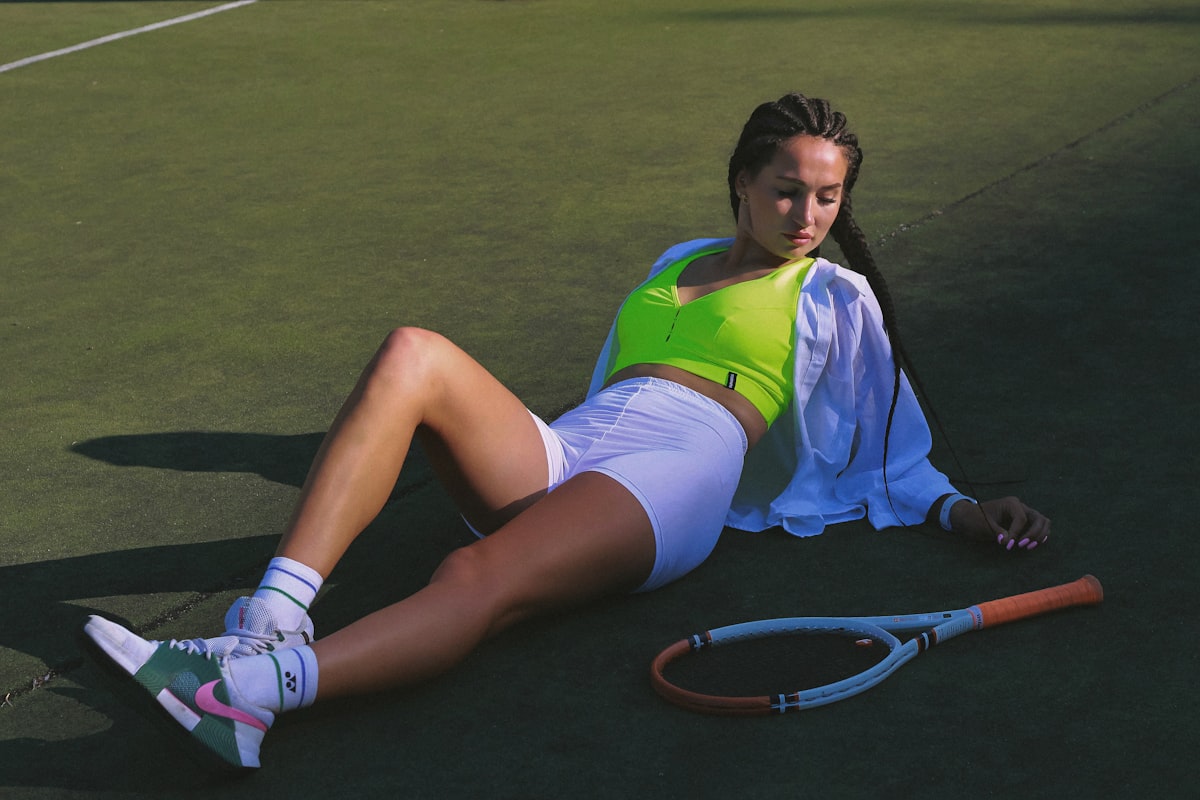
1. The purist. An optic-white polo with white tailored shorts or a pleated skirt, white socks, and white sneakers. This is the original tennis look and still the most powerful — head-to-toe white reads as confident, not boring, precisely because so few people commit to it. Keep everything genuinely clean and the outfit needs nothing else.
2. The navy anchor. A crisp white tee with French-navy shorts and a navy cap. The high contrast is sharp and photographs beautifully, and navy grounds the white so the outfit feels considered rather than stark. This is the easiest on-court look to get right.
3. The soft accent. Whites with a single muted colour — a sage or pale-blue cap, or a fine knit in that shade tied at the waist. One accent is the rule; the moment you add a second colour, the quiet-luxury effect starts to slip. Restraint is doing the work here.
4. The oversized take. A slightly oversized organic-cotton tennis tee with fitted shorts beneath. Relaxed up top, sharp on the bottom — this is the most modern, most comfortable on-court look, and it is also the coolest in genuine heat.
These five take the aesthetic into everyday life, where most of your wearing actually happens.
5. Tee and tailored shorts. A heavyweight white tee with neutral tailored shorts and white sneakers. The simplest court-to-coffee outfit there is — and proof that tenniscore can be just a tee and shorts when the fabric and fit are right.
6. Polo and trousers. A knit polo tucked into light trousers with a leather belt. This reads as tenniscore without a single piece of actual sportswear, which makes it ideal for anywhere a tee would feel too casual.
7. The shoulder knit. Any plain outfit — tee, trousers, sneakers — plus a fine knit draped over the shoulders. This is the most recognisable tenniscore gesture and the easiest to deploy; it lifts an ordinary outfit into the aesthetic in one move.
8. Joggers and a polo. Relaxed organic-cotton joggers with a tucked-in polo and clean sneakers. Off-duty but still composed — the polo’s collar keeps the joggers from reading as loungewear. More on this in our guide to the tennis joggers outfit.
9. Skirt and plain knit. A pleated skirt with a fine knit instead of a polo. Softer and a little more fashion than sport, this is tenniscore leaning toward its quiet-luxury cousin — elegant, understated, easy.
These three push the aesthetic upward, for occasions that ask for a little more.
10. The blazer pairing. A tennis-white tee under an unstructured navy blazer with tailored trousers. Sport codes meeting smart-casual — the tee keeps the blazer relaxed, the blazer keeps the tee sharp. Genuinely versatile.
11. Monochrome cream. Head-to-toe cream in mixed textures — a knit, cotton, a touch of fine wool. This is quiet luxury at its most literal: no contrast, no accent, just one quiet colour and the interest carried entirely by fabric.
12. Polo and pressed shorts. A crisp knit polo with sharply tailored shorts and loafers. Appropriate for a club lunch or a summer event with a relaxed dress code — proof that shorts can look genuinely smart when the rest of the outfit is precise.
These three handle changeable weather and long days, which is when most outfits fall apart.
13. The overshirt layer. A tee with a light overshirt or windbreaker in a neutral tone. Useful for cool mornings and evening sessions, and the neutral colour keeps the layer from shouting. Practical without breaking the palette.
14. Knit over collar. A fine knit worn over a collared polo, with the collar left out. This is a genuine 1930s tennis-club detail that still looks completely right today — a small, specific move that signals you know the aesthetic properly.
15. The full transitional. Joggers, a tee, clean sneakers, and a fine knit tied on. Built to move from a morning hit to lunch to an evening without a single change of clothes — the most practical outfit on this list, and a perfect example of court-to-street dressing.
Accessories finish a tenniscore outfit, but they are also where the costume risk is highest, so apply exactly the same restraint you would to the clothes. A cap or visor is the most natural accent — genuinely useful in sun, clean in colour, and best in white or navy. A quality bag or duffle in canvas, or with leather trim, carries the aesthetic far better than a branded sports holdall ever will. Clean socks, worn at a sensible mid-calf or ankle length, are a real part of the look rather than an afterthought. Beyond that, keep it minimal: a simple watch, perhaps sunglasses, and little else. Wristbands and headbands belong on the court during actual play; worn off it as pure styling, they tip an outfit straight into costume. The rule never changes — one or two well-chosen pieces, never the whole set at once.
A few errors come up constantly. The first is wearing every reference at once — skirt, polo, visor, wristbands, and shoulder knit together is a costume, not an outfit. The second is breaking the palette with a bright colour or a bold print, which collapses the quiet-luxury effect instantly. The third is scuffed or dirty white sneakers; the aesthetic depends on things looking immaculate, and tired shoes undo everything above them. The fourth is choosing cheap, thin fabric — tenniscore reads as expensive only when the materials genuinely are good. Avoid those four and almost any combination works.
The thread through all fifteen outfits is restraint. Each one uses just one or two tennis references, never all of them at once. The single fastest way to look like you are in costume is to combine a pleated skirt, a polo, a visor, wristbands, and a shoulder knit in one look — so do not.
Beyond that, pick your pieces for genuine use rather than for the photo. A polo you would wear to actual lunches. A tee you would reach for anyway. A knit you genuinely feel cold without. When the wardrobe is made of clothes you use, tenniscore stops being a trend you perform and becomes simply the way you dress — built from clothes that happen to carry the sport’s quiet, classic codes. That is the version worth owning, and it is the one that still looks right in three years.
It also helps to think in terms of a uniform rather than a series of one-off outfits. The people who wear tenniscore best tend to repeat a small number of combinations they know work, varying them only slightly from day to day. That is not a lack of imagination — it is the entire old-money logic the aesthetic borrows from. A reliable handful of looks you can assemble without thinking is worth far more than a wardrobe of options you have to decide between every single morning.
What pieces do I need for tenniscore outfits? A knit polo, a heavyweight organic-cotton tee, tailored shorts or a pleated skirt, a fine knit, and clean white sneakers. That small core recombines into dozens of looks.
How do I wear tenniscore without looking like a costume? Use only one or two tennis references per outfit and let the rest be ordinary. Combining every code at once is what tips a look into fancy dress.
Can men wear tenniscore? Absolutely. A polo with tailored shorts or trousers, a tee under a blazer, or joggers with a tucked-in polo are all clean, masculine tenniscore outfits.
Do tenniscore outfits work off the court? Yes — most do. Pieces such as a polo, a refined tee, and a fine knit are designed to look right at lunch or in the office, not only during a match.
What colours should tenniscore outfits use? Optic white, cream, and French navy as the base, with one muted accent such as sage or pale blue. The restrained palette is what holds the aesthetic together.
How many pieces do I really need for a tenniscore wardrobe? Around six to eight — a polo, two tees, shorts, a skirt or trousers, a fine knit, and sneakers. Kept in one palette, they generate every outfit in this guide.
Is tenniscore only for summer? No. Layered outfits — a knit over a polo, an overshirt, joggers with a tied-on knit — carry the aesthetic through cooler months without losing its character.
Fifteen tenniscore outfits, one small wardrobe. That is the real lesson of the aesthetic: it rewards a few well-chosen, well-made pieces recombined with restraint, not a constant stream of new buys. Invest in the cornerstones — a good polo, a heavyweight tee, a fine knit — keep to a quiet palette, wear one or two references at a time, and you will be wearing genuine tenniscore long after the trend cycle has moved elsewhere.